





Oily skin still needs moisturizer — the AAD confirms skipping it triggers compensatory oil production. Dermatologists explain the dehydration-sebum loop and the best non-comedogenic fixes.
Does Oily Skin Need Moisturizer? Dermatologists Explain

Between 24.8% and 33.3% of people report oily facial skin — and most of them have been told to skip moisturizer entirely (, 2024). That advice isn't just wrong. It's actively making the problem worse.
Oily skin doesn't produce excess sebum because it has too much moisture. It often produces excess sebum because it doesn't have enough. When your skin barrier loses water faster than it can hold onto it, your sebaceous glands pick up the slack — and that compensation loop is exactly what keeps the shine coming back every hour.
This article breaks down the science behind that cycle, explains what to look for in a moisturizer that won't add to the grease, and clears up the ingredient confusion that keeps oily-skin people reaching for the wrong products — or none at all.
Key Takeaways
- Skipping moisturizer triggers compensatory sebum overproduction — dehydrated skin signals oil glands to produce more, not less (AAD, 2023).
- Oily skin and dehydrated skin are two separate conditions that coexist. You can have both.
- Lightweight humectants like hyaluronic acid hydrate without adding oiliness. A hyaluronic acid and moisturizer combination maintained skin hydration for 8 hours while lowering transepidermal water loss (International Journal of Cosmetic Science, 2025).
- The AAD recommends oil-free, non-comedogenic gel moisturizers specifically for oily skin — and most acne patients see fewer breakouts within 4–8 weeks of adding one.
Why Does Oily Skin Produce So Much Sebum?
High androgen levels — or an oversensitivity of the sebaceous glands to normal androgen levels — are the primary driver of oily skin in most people (, 2010). In 2018, researchers confirmed that sebum production rises sharply at adrenarche (around age 9), driven by androgens, and reaches adult levels by approximately age 17 (, 2018). This hormonal baseline is something no moisturizer changes — but it isn't the only trigger in play.
CITATION CAPSULE: Sebaceous glands are regulated primarily by androgens. Sebum production rises at adrenarche and reaches adult levels around age 17, according to a 2018 PMC review of sebaceous gland endocrinology. Of the four primary sebum triggers — hormonal fluctuations, heat, stress, and dehydration — only dehydration is directly addressable with skincare. When the skin barrier loses water through transepidermal water loss (TEWL), sebaceous glands increase oil output as compensation, meaning skipping moisturizer to reduce oiliness can paradoxically worsen the problem (PMC, 2018; AAD, 2023).
There are four well-documented triggers for excess sebum production. Understanding which ones you can control changes how you approach your routine:
Hormonal fluctuations — Androgens directly stimulate sebaceous gland activity. This includes puberty, hormonal cycles, pregnancy, and conditions like PCOS. Oily skin during these periods is a physiological response, not a hygiene failure.
Heat and humidity — Warm, humid environments dilate pores and accelerate sebum secretion. This is why skin feels noticeably oilier in summer or in tropical climates — the glands respond to environmental temperature changes.
Stress — Cortisol, the stress hormone, stimulates androgen production, which in turn activates the sebaceous glands. Prolonged stress can worsen chronic oiliness beyond what genetics alone would predict.
Dehydration and barrier disruption — This is the one you can directly address with a moisturizer. When skin loses water through the surface (measured as transepidermal water loss, or TEWL), it signals the sebaceous glands to increase oil output. The skin is trying to compensate. More on this in the next section.

What Actually Happens When Oily Skin Skips Moisturizer?
"When skin becomes dry, the body produces more oil; the extra oil can clog pores and may lead to more breakouts" — that's a direct statement from the (2023). It's also the mechanism most people with oily skin have never been told about.
CITATION CAPSULE: The American Academy of Dermatology confirms that dehydrated skin triggers compensatory sebum overproduction: when skin loses water, sebaceous glands increase oil output to compensate, which can clog pores and worsen breakouts. This cycle — skip moisturizer, skin dehydrates, more oil produced — is the reason dermatologists recommend oil-free, non-comedogenic moisturizers even for acne-prone skin (AAD, 2023).
Here's what the loop actually looks like:
- You skip moisturizer to reduce shine.
- Skin loses water through the surface (TEWL — transepidermal water loss).
- The skin barrier weakens. Sebaceous glands detect the hydration deficit.
- Glands increase sebum output to try to compensate for the moisture loss.
- More sebum, more shine — and you conclude that moisturizer makes things worse.
TEWL sounds clinical, but it's straightforward: water continuously evaporates from the skin surface. In 2023, researchers at Dermatology Times reported that acne patients exhibit higher TEWL and higher sebum production compared to the general population — and those actively using acne treatments showed even further barrier impairment (, 2023). TEWL and sebum are measured separately because they're biologically separate. One is water loss; the other is lipid secretion.
UNIQUE INSIGHT
This is the insight most oily-skin content misses: oily skin and dehydrated skin are not opposites. You can have both simultaneously. The T-zone shines all day while the cheeks feel tight. The forehead breaks out while the under-eye area flakes. These aren't contradictions — they're signs of a skin barrier that's managing hydration poorly. Treating the dehydration directly, with a water-based humectant formula, addresses the root cause rather than masking the symptom.

Doesn't Moisturizer Make Oily Skin Greasier?
Not if you choose the right type — and the distinction is simpler than most people think. In 2025, the International Journal of Cosmetic Science published research showing that combining a hyaluronic acid serum with a moisturizing cream sustained skin hydration for 8 hours, lowered TEWL, and normalized surface lipids — without adding oiliness (, 2025). The formula mattered; the category didn't.
CITATION CAPSULE: A 2025 study in the International Journal of Cosmetic Science found that a hyaluronic acid serum combined with a moisturizing cream maintained skin hydration for 8 hours and lowered transepidermal water loss, while normalizing surface lipids. This confirms that water-based humectant formulas can hydrate oily skin without increasing shine — the key variable is formula type, not whether to moisturize at all.
The confusion comes from lumping all moisturizers into one category. There are three main ingredient types, and they don't all behave the same way on oily skin:
Humectants attract water molecules from the environment and from deeper skin layers, pulling hydration into the upper layers of the skin. They're water-based, fast-absorbing, and leave no oily residue. Hyaluronic acid and glycerin are the most common. In 2021, a clinical trial found that a 3% niacinamide gel-cream may actively help control oil production in oily skin (, 2021, citing clinical research). Niacinamide is another humectant-adjacent ingredient worth looking for.
Emollients smooth and soften the skin surface by filling in gaps between skin cells. Lightweight emollients like squalane (plant-derived, non-comedogenic) and dimethicone are generally fine for oily skin. Squalane in particular has anti-inflammatory properties.
Heavy occlusives form a physical barrier film on the skin surface to trap moisture in. Petrolatum, mineral oil, lanolin, beeswax, and heavy silicones fall into this category. These are the ones to avoid with oily skin — they trap everything beneath them, including sebum and bacteria, and can block pores.
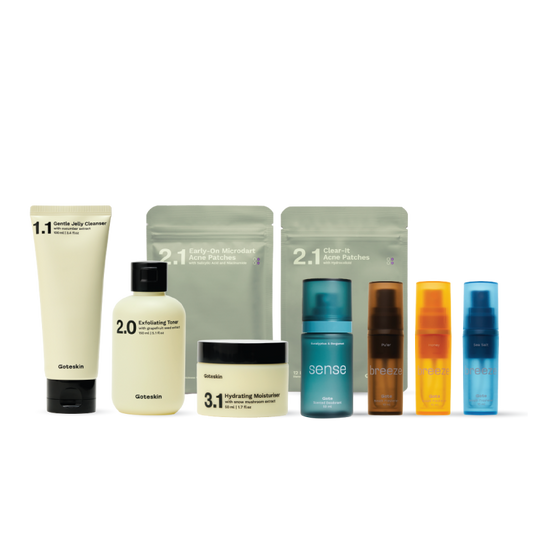
A lightweight, water-based formula with humectants handles the hydration job without adding a lipid layer. That's the formulation logic behind products like our Hydrating Moisturiser — humectants to draw moisture in, with a texture designed to sit lightly on oily skin.

What Ingredients Should Oily Skin Avoid in a Moisturizer?
The recommends oil-free, noncomedogenic moisturizers for oily skin, noting that gel formulas are lighter than cream-based products (AAD, 2024). "Noncomedogenic" means the formula has been tested not to block pores — it's the most important label to look for, more useful than marketing terms like "mattifying" or "pore-minimizing."
The comedogenicity scale runs from 0 (won't clog pores) to 5 (highly likely to clog). For reference:
| Ingredient | Comedogenicity | Verdict for Oily Skin |
|---|---|---|
| Hyaluronic acid | 0 | ✓ Safe — use freely |
| Glycerin | 0 | ✓ Safe — use freely |
| Niacinamide | 0 | ✓ Safe — may reduce oil |
| Squalane | 1 | ✓ Generally safe |
| Jojoba oil | 2 | ⚠ Moderate — monitor |
| Shea butter | 0–2 | ⚠ Fine in small amounts |
| Coconut oil | 4 | ✗ Avoid for oily/acne skin |
| Mineral oil | 0–2 | ✗ Avoid heavy concentrations |
| Petrolatum | 0 | ✗ Too occlusive for oily skin |
| Isopropyl myristate | 5 | ✗ Avoid |
CITATION CAPSULE: The American Academy of Dermatology recommends oil-free, noncomedogenic gel moisturizers for oily skin — specifically because gel formulas are lighter than cream-based alternatives and less likely to contribute to pore blockage (AAD, 2024). Comedogenicity ratings run from 0 (no clogging risk) to 5 (high risk). Key ingredients safe for oily skin include hyaluronic acid (0), glycerin (0), niacinamide (0), and squalane (1). Ingredients to avoid include coconut oil (4), isopropyl myristate (5), and heavy occlusives like petrolatum. The most reliable label signal is "noncomedogenic" — more predictive than marketing claims such as "mattifying" or "pore-minimizing."
A note on comedogenicity ratings: they're derived from rabbit ear studies and aren't a perfect predictor of how an ingredient behaves in a full formula on human skin. Concentration matters too — a product with coconut oil listed fifteenth in a long INCI list is a different risk than one where it's listed second. Use the table as a screening tool, not an absolute verdict.
UNIQUE INSIGHT
One practical shortcut: scan the INCI (ingredient list) on any moisturizer and check where water (aqua) appears. If it's the first ingredient and heavy oils or waxes don't appear until the bottom third of the list, you're likely looking at a water-first formula appropriate for oily skin.

Can Moisturizing Actually Improve Acne and Oiliness Over Time?
Yes — and the timeline is documented. In 2023, the AAD reported that most acne patients see fewer breakouts between 4 and 8 weeks after beginning an acne-friendly moisturizer as part of a complete treatment routine (, 2023). That window matters: the first week or two may feel like things are getting worse as the skin adjusts.
CITATION CAPSULE: The American Academy of Dermatology found that most acne patients see fewer breakouts between 4 and 8 weeks after adding an acne-friendly moisturizer to their routine (AAD, 2023). The improvement reflects the skin barrier stabilizing and sebaceous gland overcompensation reducing. A 4–8 week consistent routine is the minimum evaluation threshold — the skin barrier can't recalibrate and sebaceous glands can't reduce compensatory output in less time.
What's happening during that adjustment period? Your sebaceous glands have been in overdrive. Once the skin barrier gets consistent hydration, the dehydration signal that was driving excess sebum starts to quiet down. The glands don't throttle back immediately — hence the initial adjustment — but they recalibrate over weeks as the barrier strengthens.
PERSONAL EXPERIENCE
A note on the adjustment period: If you've never moisturized with oily skin and you start now, don't panic if the first 10–14 days feel greasier than usual. Your glands have been compensating for a deficit they've learned to expect. Once the barrier holds moisture consistently, the compensation signal weakens. Most people notice a visible difference in shine and texture by week 3–4, with the clearest improvement by week 6–8.
There's also a long-term upside worth knowing. The AAD notes that people with oily skin tend to have thicker skin and develop fewer wrinkles as they age — sebum's barrier function has genuine protective value over time (AAD, 2024). The goal isn't to eliminate oil. It's to stabilize the barrier so oil production is governed by biology, not by a compensatory loop you're inadvertently triggering.

How to Apply Moisturizer if You Have Oily Skin
Timing and amount matter as much as formula choice. Here's a routine that works:
CITATION CAPSULE: Dermatologists recommend applying moisturizer to slightly damp skin to maximize humectant absorption — humectants like hyaluronic acid attract water molecules, and damp application gives them more to work with. The AAD advises using a pea- to dime-size amount; more product adds surface residue without increasing hydration. For oily skin using active ingredients (retinol, AHAs, BHAs) at night, the evening moisturizer application is the higher-priority step, as actives temporarily increase transepidermal water loss and require overnight barrier replenishment (AAD, 2023). SPF 30+ in the morning protects the barrier from UV damage that worsens TEWL.

Step 1 — Cleanse gently. Use a non-stripping, pH-balanced cleanser. Harsh cleansers strip the skin barrier further, which accelerates TEWL and restarts the dehydration loop you're trying to break.
Step 2 — Apply while skin is still slightly damp. After patting (not rubbing) dry, apply moisturizer while there's still a little moisture on the skin surface. Humectants work by attracting water — applying to damp skin gives them more to work with.
Step 3 — Use less than you think you need. A pea-size to a dime-size amount is enough. More product doesn't mean more hydration — it usually means more residue on the surface.
Step 4 — SPF in the morning. UV exposure damages the skin barrier, which worsens TEWL. Look for a lightweight SPF 30+ with a water-gel base. Many work as a combined SPF-moisturizer step for oily skin.

AM vs. PM priority: If you use active ingredients at night — retinol, AHAs, BHAs — the PM moisturizer is the more critical application. Actives accelerate cell turnover and increase TEWL temporarily. Moisturizer at night replenishes the barrier before sleep, when the skin's repair processes are most active.

Frequently Asked Questions
1. Is it OK to skip moisturizer if my skin is already oily?
No — this is the core myth. When oily skin skips moisturizer, it often becomes dehydrated, and dehydrated skin signals the sebaceous glands to produce more oil as compensation. The American Academy of Dermatology is clear: dry skin prompts the body to produce more oil, which can clog pores and increase breakouts (AAD, 2023). Oiliness and hydration are separate variables, and you can have both problems at once.
2. What's the difference between oily skin and dehydrated skin?
Oily skin refers to excess sebum — a lipid produced by sebaceous glands. Dehydrated skin refers to a lack of water content in the upper skin layers. These are biologically distinct. Researchers measure them separately: sebum with a sebumeter, skin hydration with a corneometer, and water loss with a TEWL meter. You can have oily, dehydrated skin simultaneously — common on the T-zone — which is why treating them separately with a water-based moisturizer and a non-stripping cleanser is more effective than avoiding moisturizer entirely.
3. Will a moisturizer clog my pores?
Only if it contains high-comedogenicity ingredients or heavy occlusives. Formulas built on humectants (hyaluronic acid, glycerin, niacinamide) and lightweight emollients (squalane) have a comedogenicity rating of 0–1 and won't block pores. The AAD specifically recommends oil-free, noncomedogenic gel moisturizers for oily skin (AAD, 2024). Look for "noncomedogenic" on the label and cross-check any unfamiliar ingredients against a comedogenicity reference before buying.
4. How long until I see results after adding a moisturizer?
Based on AAD clinical data, most acne patients see fewer breakouts between 4 and 8 weeks after starting an acne-friendly moisturizer (AAD, 2023). The first 1–2 weeks may feel like an adjustment — your sebaceous glands have been compensating for dehydration and don't throttle back immediately. Give it a full 6–8 week trial before evaluating. Track changes in T-zone shine, breakout frequency, and how tight your skin feels in the morning.
5. Does living in a humid climate mean I can skip moisturizer?
No. Ambient humidity adds moisture to the air, but it doesn't bypass the skin barrier or eliminate TEWL. Moisturizer's primary job is to support the barrier function of the skin itself — how well it retains water — not to add moisture from outside. In fact, high humidity combined with a compromised skin barrier can worsen acne, because bacteria thrive in warm, moist environments. A lightweight, water-based moisturizer is appropriate regardless of climate.

The Verdict
Oily skin doesn't overproduce oil because it's too hydrated. It often overproduces oil because it's not hydrated enough. Skipping moisturizer breaks the barrier down, raises TEWL, and triggers the glands to compensate — feeding the very problem you're trying to solve.
The fix isn't to avoid moisturizer. It's to choose the right one:
- Water-based, humectant-first formulas (hyaluronic acid, glycerin, niacinamide)
- Oil-free and noncomedogenic — look for both on the label
- Gel texture — lighter than creams, no occlusive film
Add it morning and night, use a pea-size amount, and apply to slightly damp skin. The adjustment period lasts up to two weeks. The improvement, for most people, shows up within 4–8 weeks — fewer breakouts, less reactive shine, and a skin barrier that's working with your biology rather than against it.

If you're dealing with persistent cystic acne, speak with a dermatologist — moisturizer is one part of a complete routine, not a standalone treatment.
Related Articles


