





That tight, squeaky-clean feeling after toner is barrier damage, and harsh products trigger more oil, says the AAD. What oily skin needs in humid Malaysia.
Why Drying Toners Make Oily Skin Worse (And What to Use)

That tight, "squeaky clean" feeling you chase after toning? It isn't a sign of clean skin. It's your barrier waving a small white flag. And if your skin runs oily, that stripped feeling is about to backfire in a way most product labels never warn you about.
Plenty of us were raised on stinging, alcohol-heavy astringents. They promised to "clarify" and "mattify," yet the greasiness kept creeping back by lunchtime. Oily skin is common in this part of the world: a multi-city Asian study found 25.6% of women reported oily skin ([Nouveau-Richard et al., Skin Research and Technology], 2007). So this matters for a lot of faces.
Here's what the science actually says about why stripping makes oil worse, what a toner is really for, and what oily skin in a hot, humid climate should reach for instead.
Key Takeaways
- A toner should never leave skin feeling tight or stripped, even oily skin. The "squeaky clean" sensation signals barrier disruption, not cleanliness.
- Harsh products can trigger *increased* oil production ([AAD]). Skin's natural surface pH sits near 4.7 ([Lambers et al., 2006]), and alkaline, alcohol-heavy products knock it off balance.
- Soothing actives beat scouring: a double-blind trial found 2% niacinamide significantly lowered sebum at weeks 2 and 4 ([Draelos et al., 2006]).
- In Malaysia's heat and ~80% humidity, your environment already maximises oil. The fix is to calm and hydrate, not strip.
What Is a Toner Actually Supposed to Do?
A modern toner does three quiet jobs: it lifts leftover residue after cleansing, helps skin return to its natural slightly acidic pH, and lays down a first thin layer of hydration. According to The Ordinary's ingredient education, toners can also prep skin to absorb what comes next. Degreasing was never the point.
CITATION CAPSULE :A modern toner is a lightweight hydration and pH-balancing step, not a degreaser. According to The Ordinary's skincare education, the old idea that a toner should "shrink pores" is a myth: pores don't have muscles and can't be tightened by a liquid. Today's toners, including Asian-beauty "skin softeners," are formulated to hydrate and rebalance the skin's surface rather than strip it dry.
So where did the stinging, eye-watering version come from? Decades ago, heavy cold creams left a greasy film, and alcohol-soaked "clarifying" toners were sold as the antidote. That astringent era trained a whole generation to equate "tingle" with "working." The pendulum has since swung. Modern hydrating toners and Asian-beauty skin softeners treat the step as nourishment, not punishment.
One honest note worth keeping: a toner can't shrink your pores. Pore size is mostly genetics and oil flow, not something a splash of liquid tightens. A good toner makes skin feel comfortable and lightly dewy. That's the whole brief.

Why Does Stripping Oily Skin Backfire?
Stripping backfires because dryness and oiliness aren't opposites. The American Academy of Dermatology is blunt about it: "using a face wash that is too harsh can irritate your skin and trigger increased oil production" ([AAD]). The same logic extends straight to astringent toners. Punish the barrier, and skin answers with more sebum.
CITATION CAPSULE: The American Academy of Dermatology warns that "using a face wash that is too harsh can irritate your skin and trigger increased oil production" ([AAD]). The AAD specifically advises people with oily skin to avoid alcohol-based products, which can irritate skin. Alcohol-heavy astringent toners fall into exactly that category: they over-clean, the barrier reacts, and oil output climbs to compensate.
This is the rebound oil loop, and it's the same mechanism we covered when explaining [why oily skin still needs moisturiser]). Dehydrated skin is not less oily skin. You can be greasy and dehydrated at the same time, which is why "drying it out" never sticks.
There's a measurable reason stripping hurts. Healthy skin keeps a slightly acidic surface, the acid mantle, that protects against bacteria and water loss. In 2006, a large study of 330 subjects found the natural average surface pH sits around 4.7 ([Lambers et al., International Journal of Cosmetic Science], 2006). Earlier work showed that washing with alkaline products pushes that pH up by about +0.45, versus only +0.19 for water alone, and the shift lingers after a single wash ([PubMed], 1997).
CITATION CAPSULE: Skin's natural surface pH averages about 4.7, a slightly acidic state that supports the acid mantle and resident skin flora ([Lambers et al., 2006]). Alkaline cleansing raised skin pH by roughly +0.45, compared with +0.19 for a plain water wash, and the elevation persisted after a single wash. Repeatedly nudging skin alkaline disrupts the barrier enzymes that govern hydration and oil balance.

Leave-on astringents pile onto that effect. A 2025 pilot study in Scientific Reports suggests that ethanol above roughly 15% can compromise barrier integrity and raise transepidermal water loss, the rate at which skin leaks moisture. More water out means a drier surface and, often, more rebound oil.
Is Alcohol in Toner Bad for Oily Skin?
For oily skin, the problem is high concentrations of drying alcohols, like SD alcohol or alcohol denat., sitting in a leave-on astringent. These small, volatile alcohols dissolve skin lipids and raise water loss. That's the opposite of what a barrier-stressed, oily face needs, even if the first splash feels refreshingly matte.
The word "alcohol" alone isn't the verdict, though. Fatty alcohols, like cetearyl, are waxy emollients and a completely different category, which is why it helps to know [which alcohols are actually drying] before you panic at a label. Dose and frequency matter too. In 2017, a study found that 70% ethanol caused no significant change in water loss at 20 applications over 14 days, yet showed a significant effect at 100 applications ([Cartner et al., International Journal of Cosmetic Science], 2017). Concentration and repetition are the real risk levers.
CITATION CAPSULE: Not all alcohol in skincare is drying, and dose matters. A 2017 study reported that 70% ethanol produced no significant change in transepidermal water loss after 20 applications over 14 days, but a significant change after 100 applications ([Cartner et al., 2017]). For oily skin, the practical risk is a high concentration of drying alcohol in a leave-on toner used twice daily, not a trace amount low on an ingredient list.
What about witch hazel, the classic "natural" astringent? Ingredient analysis from Paula's Choice notes that witch hazel contains roughly 8 to 12% tannins, and that distilled witch hazel extracts can carry around 14 to 15% alcohol. Treat that as supporting colour rather than a headline lab figure, since it's a brand source. Still, it lines up with why witch hazel can sting and tighten: tannins plus alcohol are an astringent combination, and astringent is exactly the feeling we're trying to avoid.
So the answer isn't "fear every alcohol." It's "don't soak oily, reactive skin in a high dose of drying alcohol twice a day, every day."
What Should Oily Skin Look For in a Toner Instead?
Look for humectants and soothing actives. Hydration and calm control oil better over time than stripping ever could. In 2006, a double-blind, placebo-controlled trial of 100 subjects found that 2% niacinamide significantly reduced sebum excretion rate at weeks 2 and 4 ([Draelos et al., Journal of Cosmetic and Laser Therapy], 2006). You read that right: a gentle active lowered oil.
CITATION CAPSULE: Soothing actives outperform stripping for long-term oil control. In a 2006 double-blind, placebo-controlled study of 100 participants, 2% topical niacinamide significantly reduced sebum excretion rate at weeks 2 and 4 ([Draelos et al., 2006]. The takeaway for oily skin: a calm, well-hydrated barrier produces less oil, while harsh degreasing tends to trigger the opposite, compensatory response.

Hydration deserves a mention too. Glycerin is one of the best-evidenced humectants going. In 2009, a study found that 10% glycerin outperformed propylene glycol and urea for hydrating the stratum corneum ([PubMed], 2009). A toner that delivers glycerin gives oily skin water without grease.
So what belongs in your toner, and what doesn't?
Ingredients worth looking for
Reach for glycerin, hyaluronic acid, panthenol, niacinamide, and gentle botanical soothers. These hydrate, calm, and support the barrier. They leave skin plump and comfortable rather than squeaky.
Ingredients worth skipping
Be wary of denatured alcohol sitting high on the INCI list, strong astringents, and heavy fragrance if your skin is reactive. The feel test is simple: after toning, skin should feel lightly hydrated with a soft glow, never tight.
PERSONAL EXPERIENCE
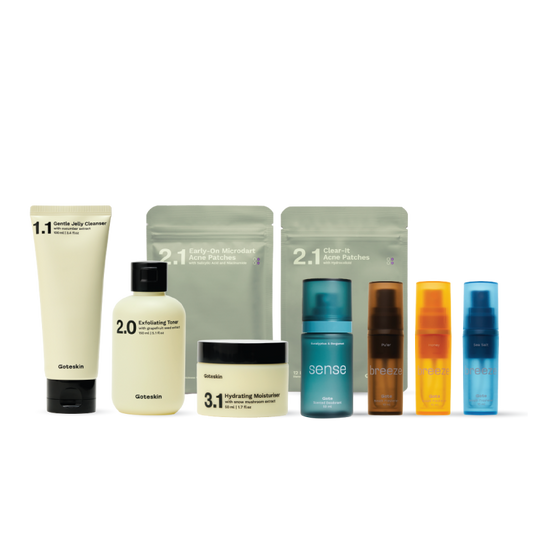
Why our toner doesn't sting: We built our toner around the gentle end of the spectrum on purpose — a mild exfoliating formula that balances and preps skin rather than scouring it with astringents. In our experience helping customers switch off harsh toners, the first one to two weeks can feel a little "less clean," because there's no stripping tingle to mistake for results. That's usually the barrier recalibrating, not the product underperforming. By week two, most people tell us the midday shine has calmed down, not ramped up.

Does Malaysia's Climate Change the Toner Equation?
Yes, and this is where most international advice misses the mark. Heat and humidity already push oil output up, so the priority here is light hydration, not degreasing. Malaysia's annual mean relative humidity sits around 80% ([MET Malaysia]). Skin never lacks ambient moisture, yet barrier water loss still drives rebound oil.
CITATION CAPSULE: In a hot, humid climate, the oil problem starts with the environment, not the cleanser. Sebum excretion rises roughly 10% for every 1°C increase in skin temperature ([Cunliffe and Williams, British Journal of Dermatology]). With Malaysia's annual mean relative humidity near 80% ([MET Malaysia]), warm skin is already primed to produce more oil, so stripping the barrier only adds insult.
UNIQUE INSIGHT
Here's the link almost no toner article uses. Sebum output climbs about 10% for every 1°C rise in skin temperature ([Cunliffe/Williams, BJD]). In a tropical climate, your face is warm for most of the day, so your environment is already turning the oil dial up. Stripping your barrier on top of that is fighting biology with more biology. The smarter move is to cool the situation down, calm and hydrate, instead of scouring skin that's already working overtime.

There's a practical upside to all that humidity. In a tropical climate, a good hydrating toner can serve as the entire hydration layer for very oily skin. Many people here do well with toner straight to a light moisturiser at night, or toner straight to SPF in the morning. If you want the bigger picture of where toner fits, see [where toner sits in a simple, fuss-free routine]. And don't skip [the sunscreen step, even on indoor days].

How to Use a Toner the Right Way
Used well, a toner takes about ten seconds and almost no product. Apply it after cleansing, while skin is still slightly damp, then follow with moisturiser to seal the hydration in. Morning and night both work. The damp-skin trick matters: humectants like glycerin grab onto that surface water instead of pulling moisture from deeper down.
For application, palms beat cotton pads for most people. Press a few drops between your hands and pat them over the face. You waste far less product, and there's no dragging or scrubbing. Cotton pads are fine if you like the extra residue-lift, just keep the pressure gentle.
What about the switch itself? If you're coming off a stinging astringent, the first week or two may feel oddly "less clean." That missing tightness is the barrier recovering, not the toner failing. Give it a fortnight before you judge. And if you're dealing with persistent acne or reactive redness that won't settle, that's a conversation for a dermatologist, not a stronger toner.

Frequently Asked Questions
1. Do toners actually dry out your skin?
Modern hydrating toners shouldn't. Alcohol-heavy astringents can, and that dryness often triggers rebound oil. The AAD warns that overly harsh products irritate skin and can trigger increased oil production ([AAD]). A well-formulated toner built on humectants leaves skin lightly hydrated and comfortable, never tight or stripped.
2. Why is my skin oilier after using toner?
Stripping likely disrupted your barrier and acid mantle. Skin's natural surface pH averages about 4.7 ([Lambers et al., 2006]), and harsh, alkaline products push it off balance. A compromised barrier loses water faster, and skin often compensates by producing more sebum. The squeaky-clean feeling is the warning sign, not the goal.
3. Is alcohol in toner bad for oily skin?
High concentrations of drying alcohols in a leave-on toner can be, because they dissolve lipids and raise water loss. Fatty alcohols are a different category entirely. Dose matters too: 70% ethanol showed no significant water-loss change at 20 applications but did at 100 ([Cartner et al., 2017]). Check where alcohol sits on the label.
4. Should oily skin use a hydrating toner?
Yes. Hydration and soothing actives control oil better than stripping over time. A 2006 double-blind trial of 100 people found 2% niacinamide significantly reduced sebum at weeks 2 and 4 ([Draelos et al., 2006]). A hydrating toner with glycerin or niacinamide gives oily skin water and calm without grease.
5. Is witch hazel good for oily skin?
It's a mixed bag. Witch hazel's tannins (around 8 to 12%) and the alcohol in distilled extracts (around 14 to 15%) make it astringent and potentially irritating for some skin, per Paula's Choice ingredient analysis. Gentler botanical soothers and humectants can balance oily skin without that barrier cost, so witch hazel isn't a must-have.
Related Articles


